inspiration, research

Magazine Review: Hi-Fructose Issue 50

This post has been a long time coming!

About a month ago we were set the impossible task of finding the latest issue of Hi-Fructose, a contemporary art quarterly magazine. I traipsed allllll over town trying to find one with no joy. Searches on eBay were also unfruitful, with only one seller listing the latest issue… and of course, they were sold out. :c

I resigned my search to maybe being able to find a back issue in the future. But last week I was browsing again on the off chance I might find a copy, and lo and behold- that seller had just restocked! Since the magazine was coming from Germany I wasn’t expecting it for at least 2 weeks, but it showed up on my doormat this morning~
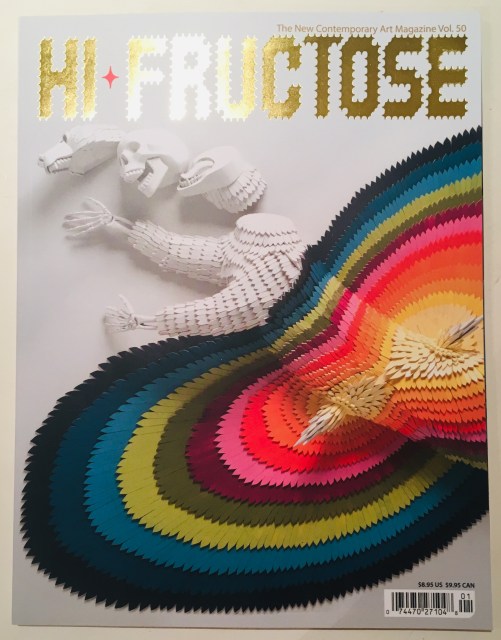
IMG_9101
Hi-Fructose: Issue 50 (Collingwood, 2019)


Here we have Issue 50 of Hi-Fructose, RRP $8.95- my cost was just under €14 with postage, which is fairly reasonable considering these magazines seem to be akin to gold dust in Europe.

Not gonna lie, I was expecting it to be a wee bit bigger than ~A4/letter size, but the quality feels great and it’s printed on nice sturdy stock. Peep that lush gold foiling on the cover! ♥ My poor photo really doesn’t do it justice! [Disclaimer: please excuse my horrible sausage fingers invading the rest of these pics!]

We’d been advised that any recent issue would do for this review task, but I was set on finding Issue 50 because Audrey Kawasaki is one of the featured artists- I’ll touch on her section of the magazine later since her section is near the end of the issue.

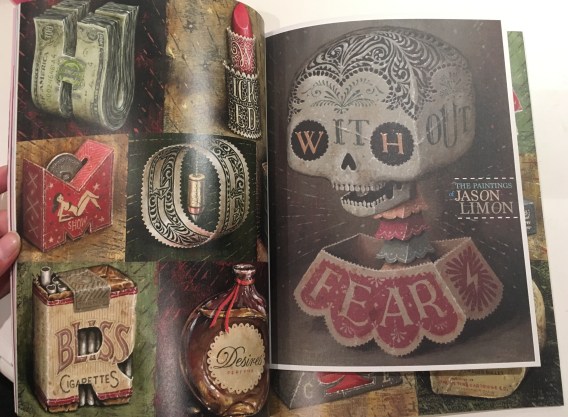
Having a quick flick through, there’s also the added bonus of a snazzy 16-page insert on the work of Jason Lemon- love this, it makes it feel very deluxe.
IMG_9102
Hi-Fructose: Jason Limon Feature (Collingwood, 2019)


Going off on a tangent, this magazine also smells really good… woodsy and organic with only a very small smidge of plasticky print smell- hooray! I’m sure any fellow bibliophiles will attest to the fact that you can tell the quality of a printed publication by how good it smells~

The magazine is beautifully laid out, with very high quality photography and artwork alongside in-depth artist interviews that are genuinely interesting. Adverts are only found at the beginning and end of the publication, which is a welcome feature- I feel like adverts ruin the flow of a magazine and distract from the otherwise beautiful artwork.
img_9103.jpg
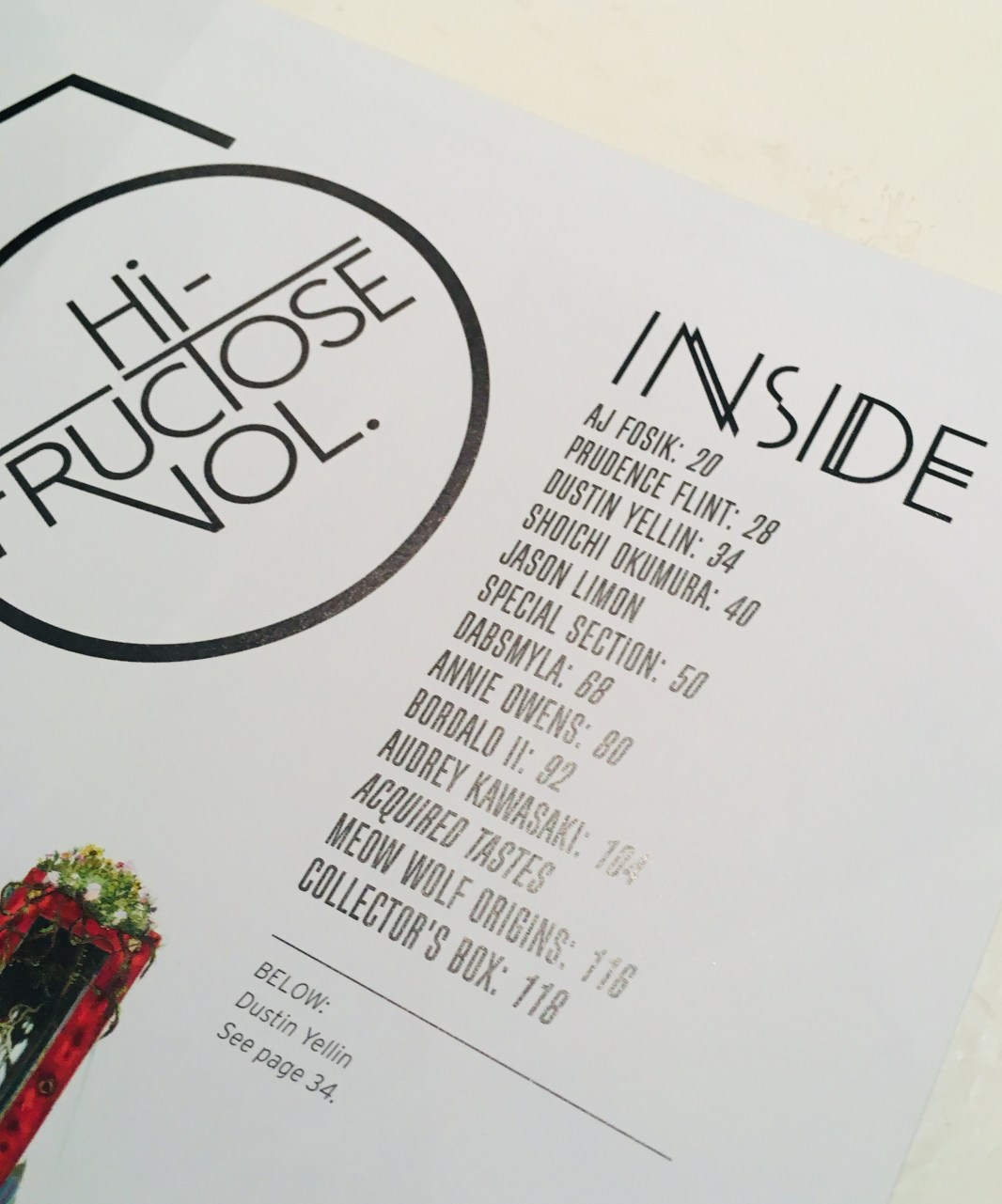
Hi-Fructose: Contents Page (Collingwood, 2019)


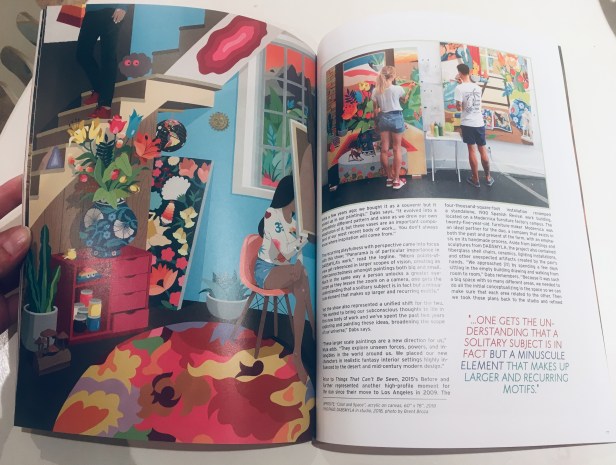
Featured artists for this issue include Annie Owens, DabsMyla, Shoichi Okumura, and of course Audrey Kawasaki, all of which have gorgeous artwork. Each section is from 6-12 pages long, with full page illustrations that are vivid and (mostly) of a good resolution. The interviews are set out beautifully and work well paired with both the illustrations and some candid shots of the artists as they work.
IMG_9105
Hi-Fructose: DABSMYLA Feature (Collingwood, 2019)


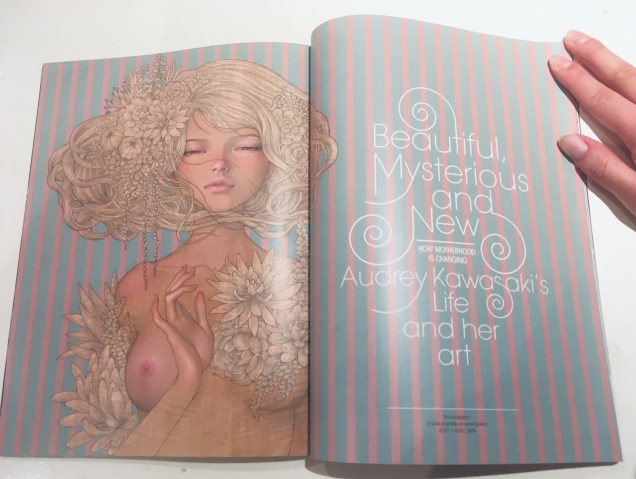
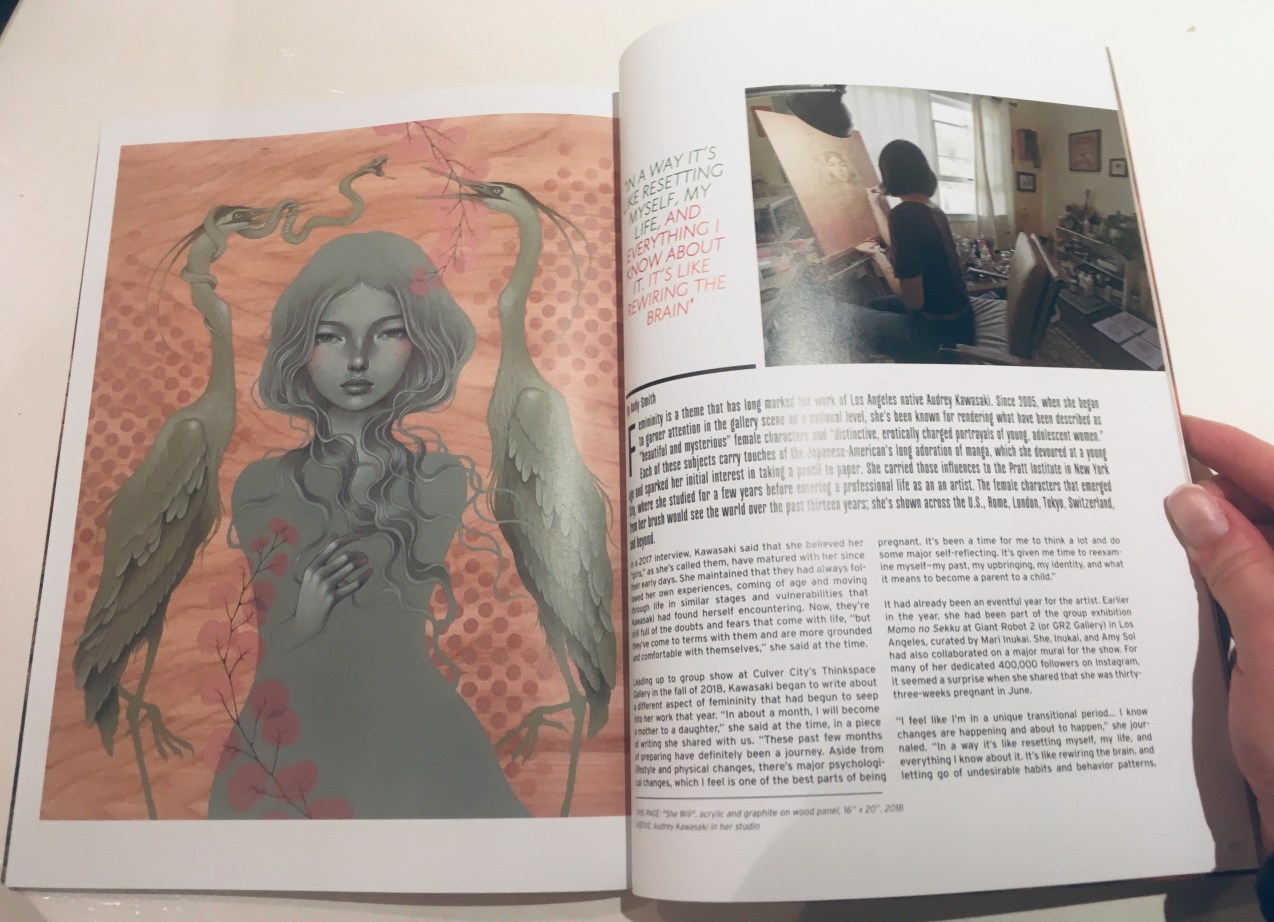
My favourite section is Audrey Kawasaki’s interview- no surprise there! Her work is hauntingly beautiful. I’m already pretty familiar with her work, but the interview alongside her illustrations is obviously very up to date, which reveals new information on her current practice and workflow as well as aspects her life that are inspiring her work. The featured artworks are from 2016 onwards and were impeccably photographed. I love the typography set against her art on the ‘cover’ page of the article- there was obviously lots of love and care put into the layout and editing of this issue.
IMG_9109

img_9106.jpg
Hi-Fructose: Audrey Kawasaki Feature (Collingwood, 2019)


Overall this is a really nice art quarterly- my top fave is still Beautiful Bizarre as that’s suited to my taste a wee bit more, but I love looking at new and upcoming examples of illustration and Hi-Fructose didn’t disappoint. I only wish it was easier to find in the UK!

Thanks for reading~


References

Beautiful Bizarre (2019). Beautiful Bizarre Magazine [online]. Available at: https://beautifulbizarre.net  [Accessed 12 Mar 2019].

Collingwood, C. (2019). Hi-Fructose: Audrey Kawasaki Feature [photograph].

Collingwood, C. (2019). Hi-Fructose: Contents Page [photograph].

Collingwood, C. (2019). Hi-Fructose: DABSMYLA Feature [photograph].

Collingwood, C. (2019). Hi-Fructose: Issue 50 [photograph]. Cover art: Fosik, AJ. Erratic Spell Release [polymer paint on wood].

Collingwood, C. (2019). Hi-Fructose: Jason Limon Feature [photograph].

Hi-Fructose (n.d.). Hi-Fructose|The New Contemporary Art Magazine [online]. Available at: https://hifructose.com  [Accessed 12 Mar 2019].

Kawasaki, A. (n.d.). Audrey Kawasaki [online]. Available at: https://www.audkawa.com  [Accessed 12 Mar 2019].

Rosa, E. (2019). Hi-Fructose. Issue 50. pp.13, 50-51, 76-77, 104-115.
inspiration, research

Artist Inspiration: 3 of My Favourite Artists

Even though I’m looking at specific artists for each degree project in terms of suitability, application and style, there are a number of artists that inspire me in all of my artistic endeavours. By looking at the work of these creators, I’ve been able to hone my own style and artistic voice through looking at their work, finding my favourite aspects and fusing these elements together to create my own style. To reference one of my favourite quotes once again, Tony DiTerlizzi once said:

“…an artist’s “style” is simply an expression composed from a combination of the elements in other artist’s work that the artist finds appealing”. (DiTerlizzi, n.d.)

Here are just three of the best artists I follow that have influenced my own process and aesthetic~

Amy Sol

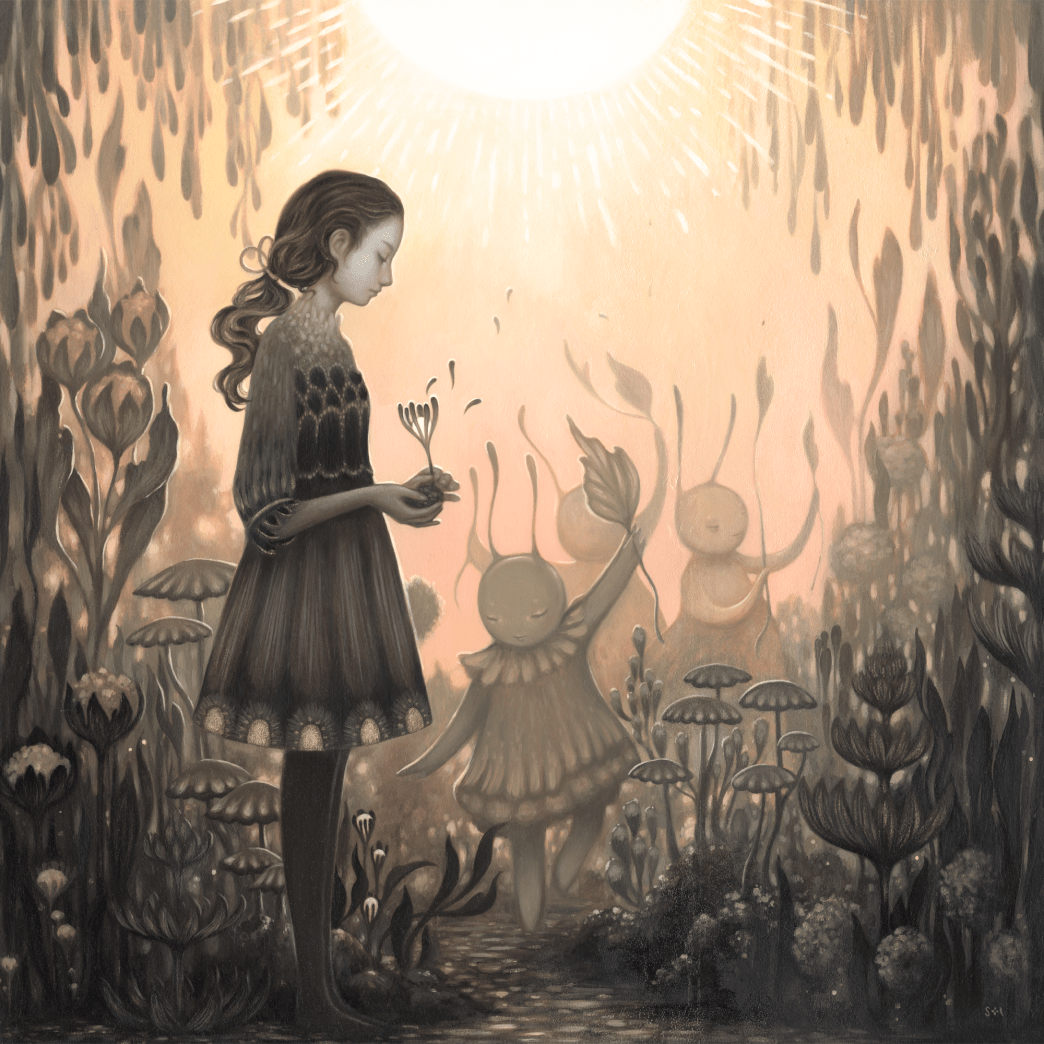
I first came across Amy Sol’s work in an issue of Juxtapoz I was given to look at in the first year of my degree, and I instantly connected with the way in which she utilises fantasy setting and figural fauna and female elements to create an ethereal feel that is both haunting and endearing.

Screen Shot 2019-03-18 at 13.13.59.png
Embers (Sol, 2018), Rae (Sol, 2018).


A recent article from Juxtapoz Online tells of her inspiration and process:

“Exploring how nature and femininity intersect, Sol’s figures are elegant and serene with a stoic, introspective power. Both her sculptural work and oil paintings are frozen scenes taken from airy dreams and tales. Populated by bewitching figures and their mythic companions, each piece is a glimpse of a delicate ritual or parlance with nature. Incorporating traditional oil painting and sculpting techniques as well as virtual reality and 3D printing, Sol has masterfully blended mediums to explore light, atmosphere, dimensionality, and mood in this new body of work. Characters and figures are rendered both in graceful oil paintings and dynamic sculptural works utilizing digital- based and classic tools to create a visual language all her own.” (Juxtapoz, 2018)

7DiurnalGarden.png
Diurnal Garden (Sol, 2018)


Since I first started following Sol, she has transitioned into a darker palette with more muted grey tones and less bright, pastel colours. I feel this is somewhat reflective in my own art, in the sense that I am starting to find it easier to refine my colour palette to suit a purpose, rather than combining colours from many different families. Nevertheless, I do still enjoy colour and like to embellish areas of my work with colour to draw a focal point or place of interest.

She also makes a wide use of flora and female characters in her work, something I also like to utilise wherever possible. Favouring female figures is a bit of a trend in the illustration world at the minute, but I find the female form so much more interesting and appealing… it seems a lot of artists agree! Combining form and nature is a quintessential match, and I love the diversity and endless possibility of working with this theme.

Overall I just find her work mesmerising ♥


Miho Hirano

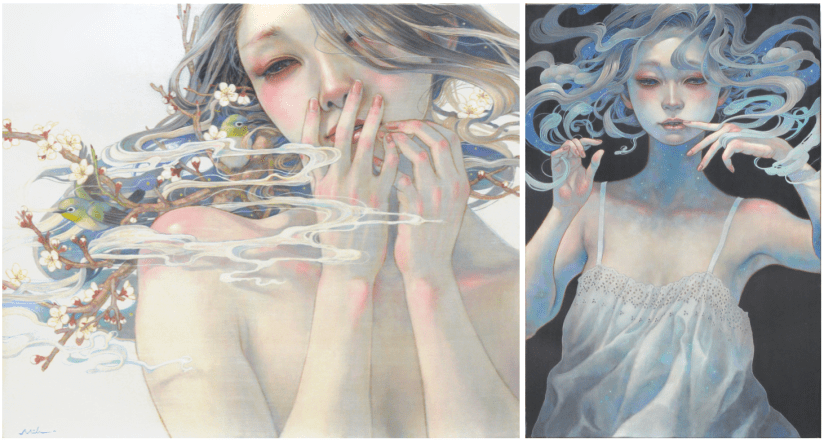
Another one of my favourite artists, Miho Hirano’s work shares many of the same qualities with Amy Sol’s work- somber palettes embellished with slight touches of colour, and female focal figures that command the piece. She uses mostly oil paint in her work, which creates smooth fluid scenes and colours that blend seamlessly together which makes for a strong sense of surrealism.

Screen Shot 2019-03-18 at 22.09.07
自慈 ‘Self Pity’ (Hirano, 2015),  夢占い ‘Dream Divination’ (Hirano, 2016)


The figures are often surrounded by flora and naturally curving patterns like foliage, smoke and hair- I often use these elements in my own work as I find they flow especially well together and I like to use as much naturally occurring imagery as possible. I especially love how she hides flowers within the hair of the figures, rather than just using them as a separate entity. Touching more upon this aspect of Hirano’s art, Tracy Eire of Beautiful Bizarre Magazine says:

“My first impulse was to connect the floral nature of Miho Hirano’s characters to reclaiming a confounded notion of womanhood, like women’s closeness to nature, their connection to the moon in myth and body, and painting them as entwined with untamed things.” (Eire, 2018)

In terms of feeling and emotion, the facial expressions of the figures play a big part in how the piece portrays these elements- the somber faces of the women in the paintings are a blank canvas for everything that surrounds them. I do find that a neutral expression cultivates a much more appealing aesthetic in my own work, leaving the possibility for the emotions of the viewer to be manipulated using other visual motifs; I find this creates a much more universally appealing piece. ♥


James Jean

I couldn’t write a favourite artists post without mentioning James Jean- I think he’s the artist that really inspired me to explore different varieties of illustration that were a bit more abstract, and has helped me grow out of my comfort zone- even though I still have a long way to go ^^”

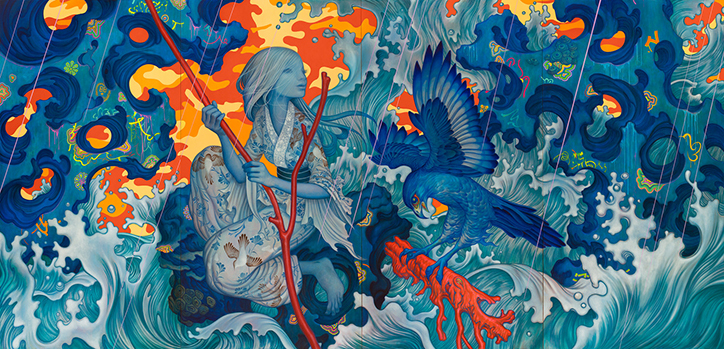
I think my favourite aspect of Jean’s artwork is the engrossing, immersive atmospheres mixed with a distinctly Japanese aesthetic. Jean states that he was introduced to Hiroshige and Yoshitoshi during art college (Jean, 2016), which influenced him to start experimenting with sea-like waves and flowing forms in his art.

James_Jean__Adrift_adrift-final-webres
Adrift (Jean, 2016)


I adore these aspects, as once again this speaks to my personal love of curved and contoured form which flows across all areas, binding the artwork together. Referencing a 2016 article from It’s Nice That, James Jean and his interviewer Jamie Green expand on these themes:

“Creatures, critters and the tendrils of foliage wrap themselves around spectral figures, occupying worlds that seem to bleed out of the canvas. He casts his surreal and decaying fantasy worlds in technicolour blues, oranges and gold.” (Green, 2016)

 “Despite my efforts to force my work to go in a certain direction, I keep going back to these dreamlike images. I suppose they are a selfish, self-indulgent escape from the anxiety-ridden age we live in.” (Jean, 2016)

Screen Shot 2019-03-20 at 23.45.02
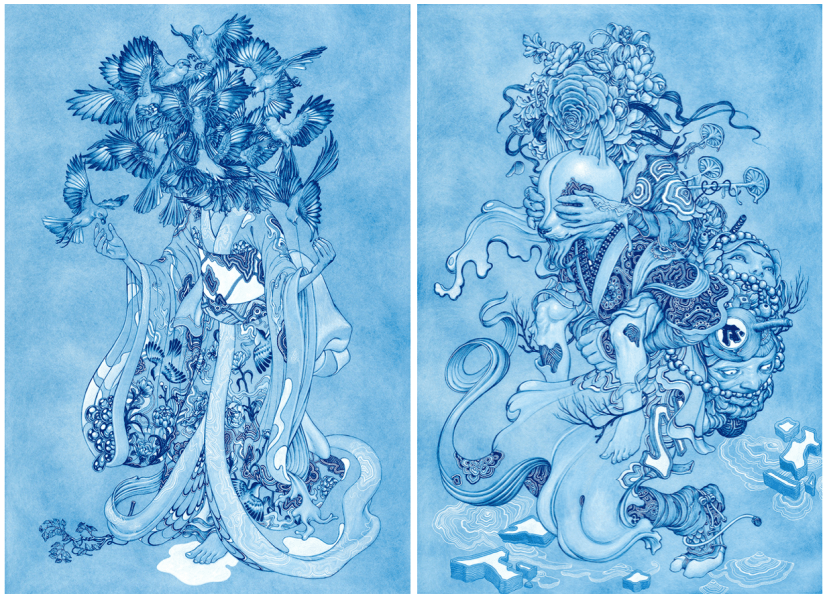
Mockingbird (Jean, 2015), Piggyback (Jean, 2015)


The detail in these pieces is simply exquisite. Viewing Jean’s artwork is truly a joy, and evokes a very calming effect on the viewer. I’ve previously written about my attention to this particular aspect of emotion in my own work- see my Design Philosophies here

There’s so many artists I’m inspired by, so this is only a small look at some of my favourites. I hope to write another post in the future about more artists that I love! Thanks for reading~


References

DiTerlizzi, T. (n.d.). Frequently Asked Questions: Art and Illustration – Tony DiTerlizzi.[Online] Diterlizzi.com. Available at: http://www.diterlizzi.com/faq-category/03-art-and-illustration  [Accessed 1st Oct 2018].

Eire, T. (2018). Hair and Hirano – Beautiful Bizarre Magazine [online]. Available at: https://beautifulbizarre.net/2018/02/15/hair-and-hirano/ [Accessed 8 Mar 2019].

Green, J., Jean, J. (2016). It’s Nice That|James Jean’s phantasmagorical world of technicolour fever dreams [online]. Available at: https://www.itsnicethat.com/articles/james-jean-zugzwang-phantasmagorical-paintings-180816  [Accessed 8 Mar 2019].

Hirano, M. (2016). 夢占い ‘Dream Divination’ [oil paint].

Hirano, M. (n.d.). Instagram – @mihohiranoart [online]. Available at: https://www.instagram.com/mihohiranoart [Accessed 8 Mar 2019].

Hirano, M. (2014). Miho Hirano|Powered by Strikingly [online]. Available at: http://mihohirano.strikingly.com [Accessed 8 Mar 2019].

Hirano, M. (2015). 自慈 ‘Self Pity’ [oil paint].

Jean, J. (2015) Adrift [mixed media].

Jean, J. (n.d.). Instagram – @jamesjeanart [online]. Available at: https://www.instagram.com/jamesjeanart/  [Accessed 8 Mar 2019].

Jean, J. (n.d.). James Jean [online]. Available at: http://www.jamesjean.com [Accessed 8 Mar 2019].

Jean, J. (2015) Mockingbird [mixed media].

Jean, J. (2015) Piggyback [mixed media].

Sol, A. (2019). amy sol. [online]. Available at: http://www.amysol.com [Accessed 8 Mar 2019].

Sol, A. (2018). AN INTERVIEW WITH AMY SOL ON HER NEW SHOW “LORE” AT SPOKE ART [online]. Available at:  https://www.juxtapoz.com/news/painting/an-interview-with-amy-sol-on-her-new-show-lore-at-spoke-art/  [Accessed 8 Mar 2019].

Sol, A (2018). Diurnal Garden [oil paint]. 

Sol, A (2018). Embers [oil paint]. 

Sol, A. (n.d.). Instagram – @amysol [online]. Available at: https://www.instagram.com/amysol [Accessed 8 Mar 2019].

Sol, A (2018). Rae [resin, enamel, oil paint]. Available at: https://spoke-art.com/collections/amy-sol-lore/products/amy-sol-rae  [Accessed 8th Mar 2019].

about, inspiration

Design Philosophies

Late last week I was tasked with creating a set of ‘philosophies’ that define my practice as an illustrator. These can be about design narrative/context, visual aesthetics, workflow or personal preferences during the entire process.

This was much more challenging than it seemed- honestly I think I’m still building up to having a very distinct design aesthetic, but I definitely have a strong idea of what I want my work to portray in my head. The two don’t always come together in the final image (yet), but my process has a few unique facets to it that help me create my work.

The final list can be found here, as well as via the top menu bar: Info -> Design Philosophies.

Hopefully these shed some more light on my practice and design criteria, as I don’t often talk about it personally. I suppose that’s the point of a blog though~

inspiration

3 Ways to Enhance Your Artwork

When exhibiting artwork (especially when the art is for sale), it’s important to consider new and interesting ways to add interest in order to capture the viewer’s attention, possibly increasing sales in an exceedingly competitive sector of the creative industry.

Of course, this isn’t from a purely business point of view, as the result must also compliment the artwork and be aesthetically pleasing. I love to add things on top of artwork, particularly runs of prints, as it adds a handmade touch that makes each piece unique.

Here are my 3 favourite ways to do this~

1- Surface Embellishment

I’m a big fan of glittery things- anything that sparkles or shifts in the light is sure to catch the eye of a bypasser, whether they like it or not! If the imagery is suited to it, adding a little bit of glitter or other embellishment can really make the difference between run of the mill art, and something people will buy.

I bought a piece from one of my favourite artists (@m_atelier on Instagram, more info in my references), and she jazzed up the art with tiny star shaped sequins before mailing it to me. As it fit well with the other imagery in the work, it looked lovely and created a sense of personalisation and preciousness.

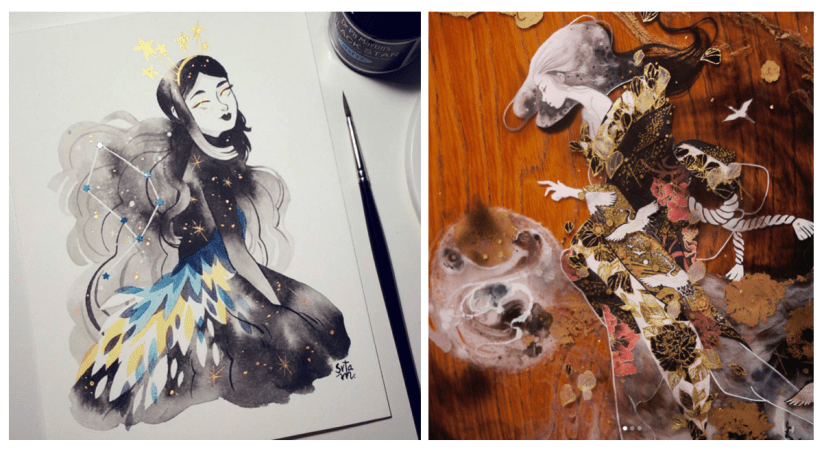
Another example of surface embellishment is using patterned paper or washi tape- @shardula uses this technique quite often, with gorgeous results that add detail and intricacy to the artwork. I suppose I use this technique myself in some of my artwork- I like to digitally overlay patterns as a replacement for colour (see the Artwork tab for examples of this), which is a similar process.

Screen Shot 2018-12-06 at 21.51.06.png
Left: Lopez (2017). Right: Licudine (2018). 

2- Metallic Overlays

This form of embellishment can come from specially made inks or pens, as well as gold leaf or gold foils- each of these methods is best suited to different applications, so it’s up to you to find out which is best for your artwork. Foils can be added to fabric, which can add ‘a little something extra’ to screen printed tote bags or t-shirts, or they can be applied on top of prints using heat or screen-printed glue.

In terms of physical printed or traditional artwork, I find it best to use either pre-filled ink pens (my favourite is the Sakura Touch-Pen Fine, available here in all sorts of finishes), or nib-pens/fine brushes with inks such as the Winsor and Newton metallic calligraphy inks (link here), which are slightly more opaque and concentrated (but are a little harder to get the hang of).

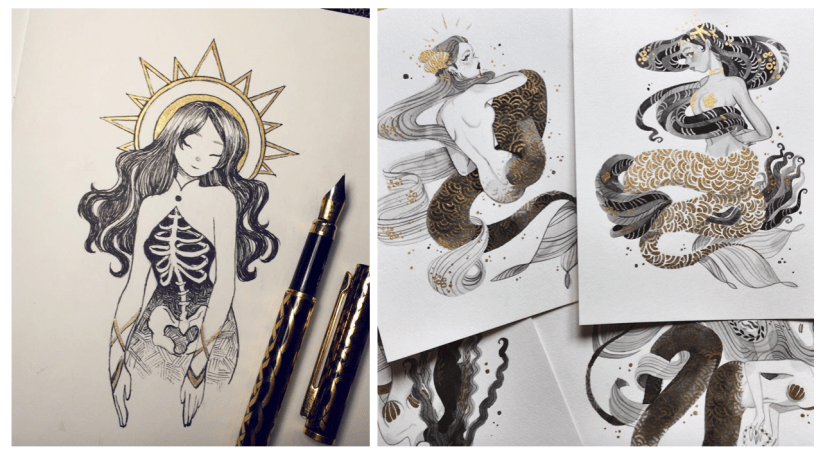
Use metallic embellishment to add highlights or extra detail to the art- again, some of my favourite examples are from artists such as Sibylline Meynet (@sibylline_m) and Feefal (@feefal), shown below:

Screen Shot 2018-12-06 at 22.24.15.png
Left: Feefal (2018). Right: Meynet (2016). 

3- Proper Packaging

If the art is hand-pulled and won’t be produced again in the same format, you can market the pieces as a ‘limited run’ by numbering and signing them individually on the border of the art. Doing this adds value to the work, as numbered editions are considered the highest quality pieces from a run of prints (e.g. risograph, screen print, etc).

If art is being offered for sale, the general consensus is to sign numbered editions in the border of the art, and printed/mass produced prints inside the actual artwork (e.g. in the bottom corner of the piece, as long as it does not detract from the overall image). Always use pencil when numbering/signing artwork in the border, as this cannot be reproduced by printing!

By investing in some fitted cellophane bags, you can protect artwork from fingerprints or creases when selling, as well as add to the value. Mounting the artwork can also add to the overall appeal, as presentation of artwork is important when vying against competing illustrators. Additionally, including a business card with each print, or making a special branded stamp or sticker to seal the packet can add a sense of professionalism.


All of these techniques can help set your art apart from the rest aesthetically, as well as increasing value which in turn will allow you to make a little bit more profit on a piece.

I hope this was slightly helpful… of course the quality of the artwork is second to none when it comes to a successful illustrator, so consider this above all else ♥


References

Cass Art (n.d.). Winsor and Newton Ink [online]. Available at: https://www.cassart.co.uk/drawing/calligraphy/calligraphy_ink/winsor_newton_ink.htm?productid=1609&utm_source=google&utm_medium=base&gclid=EAIaIQobChMIlPOX15qM3wIVCEPTCh2__AkXEAQYAyABEgKbQPD_BwE [Accessed 3 Dec 2018].

Cult Pens (n.d.). Sakura Pen-Touch Fine. [online]. Available at: https://www.cultpens.com/i/q/SK21037/sakura-pen-touch-fine?gclid=EAIaIQobChMIoavCs5mM3wIVQeJ3Ch3cEgMdEAQYASABEgLa4fD_BwE [Accessed 3 Dec 2018].

Feefal. (n.d.). Instagram – @feefal [online]. Available at: https://www.instagram.com/feefal/ [Accessed 3 Dec 2018].

Feefal (2018). Untitled [Ink].

Licudine, M. (n.d.). Instagram – @shardula [online]. Available at: https://www.instagram.com/shardula/ [Accessed 3 Dec 2018].

Licudine, M. (2018). Golden [Mixed media].

Lopez, M. (n.d.) Instagram – @m_atelier [online]. Available at: https://www.instagram.com/m_atelier/ [Accessed 3 Dec 2018].

Lopez, M. (2017). Pavonis [Watercolour, ink].

Meynet, S. (n.d.). Instagram – @sibylline_m [online]. Available at: https://www.instagram.com/sibylline_m/ [Accessed 3 Dec 2018].

Meynet, S (2016). Mermay 2016 [Ink].